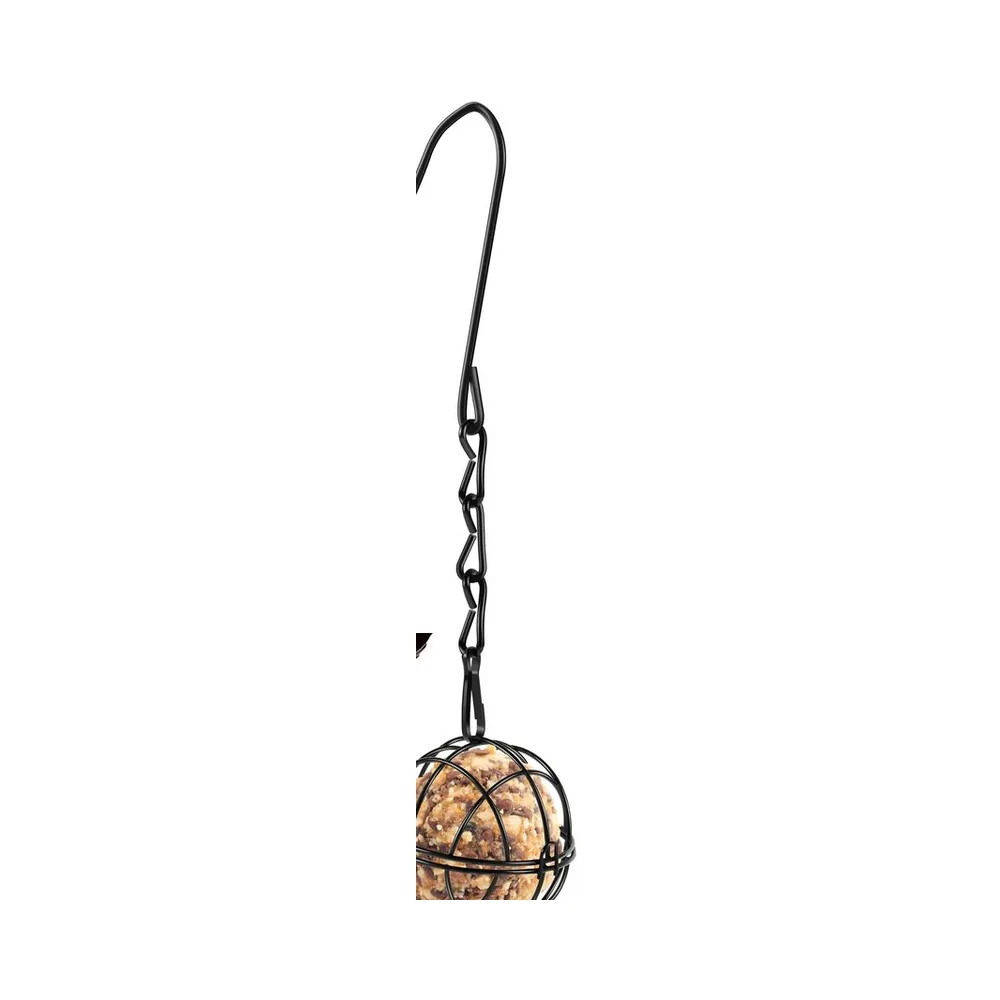
 Hanging Metal Fat Ball Feeders (Set of Four)
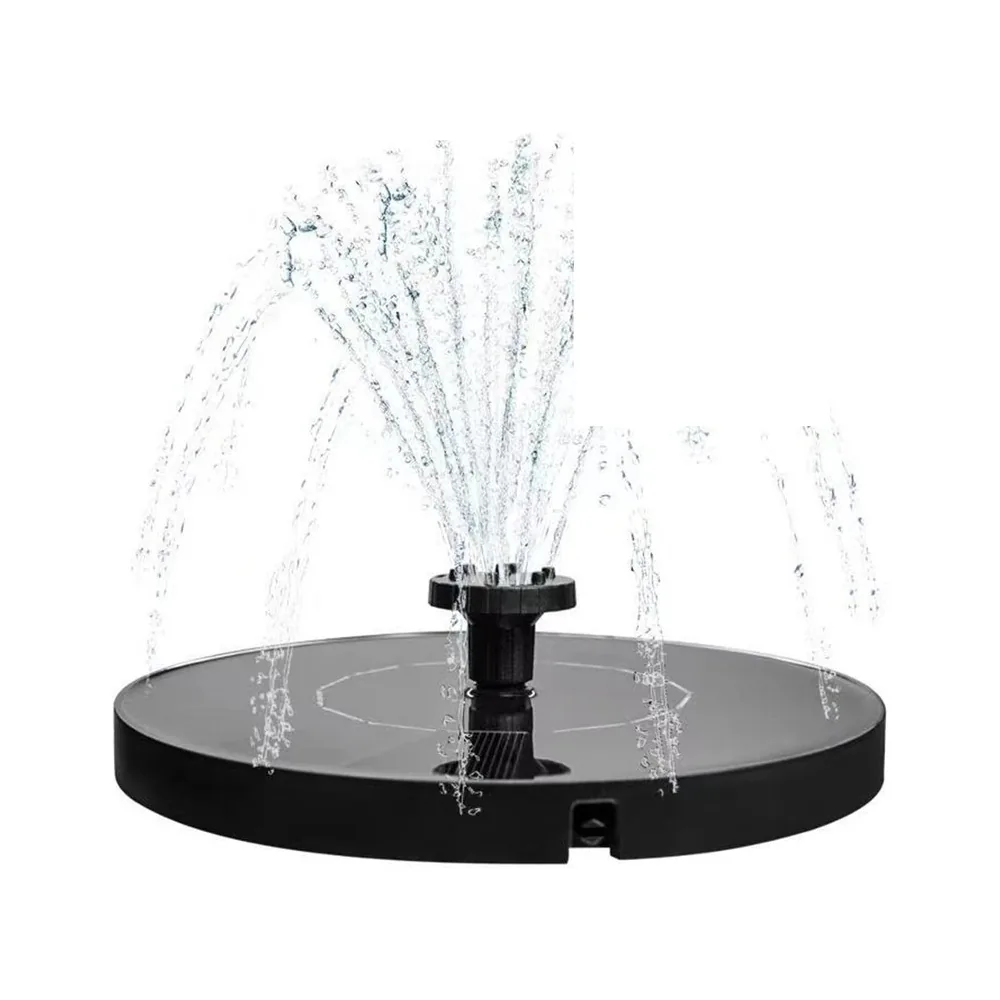 Solar Fountain for Your Bird Bath
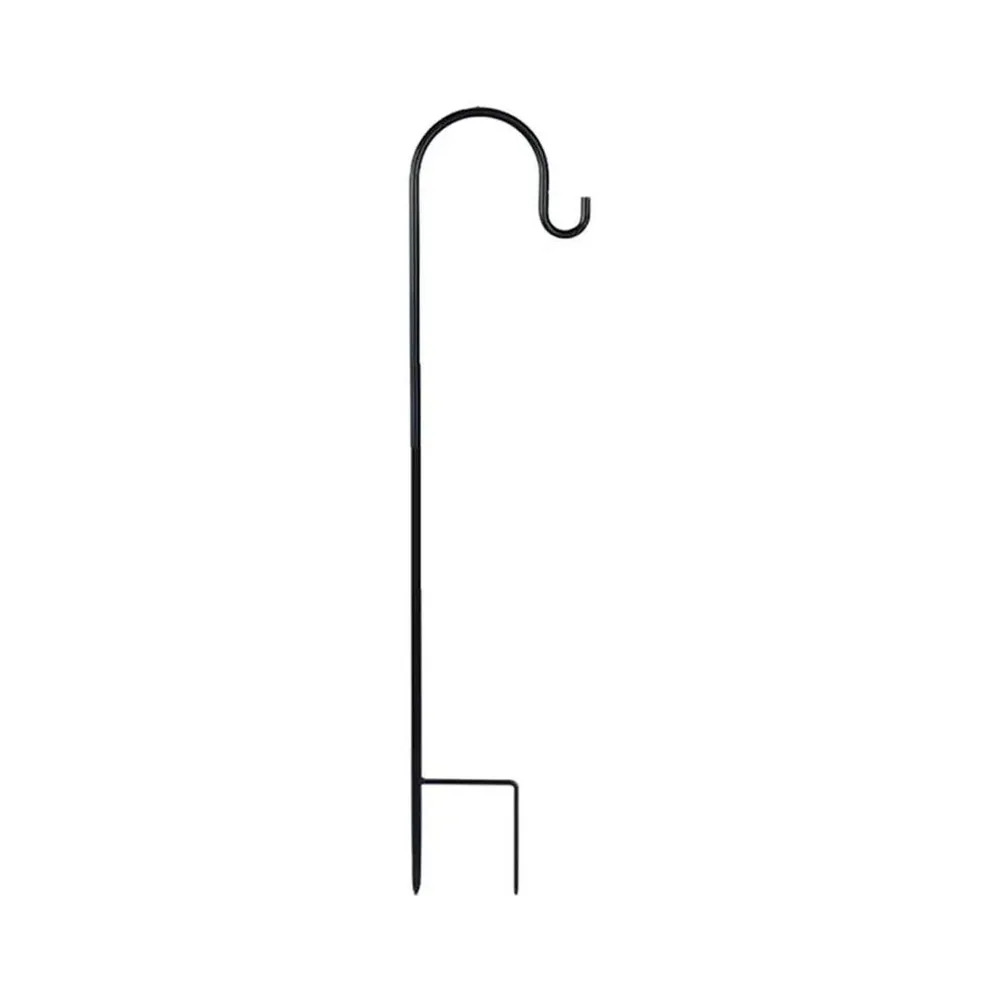 Shepherd Hook Feeder Pole
I was a joiner for twenty years, so my instinct was always wood. Then I watched what actually happens to a feeder over four British winters and revised the instinct.
The thing people get wrong is assuming cold is the enemy. It is not. Our winters are wet far more often than they are freezing, and damp is what destroys feeders.
Metal
Lasts: years. Powder-coated or galvanised steel will outlive several plastic feeders and most wooden ones.
It does not crack in frost, does not go brittle in sun, and a squirrel gets nothing out of chewing it. That last point matters more than people expect — chewing is how most feeders actually die.
Watch for: rust at the fixings. The coating survives; the hooks, chains and clips are where it starts. Check them each spring and replace a chain before it fails with a full feeder on it.
Cleaning: the best of the three. Metal feeders come apart, scrub easily and dry in an afternoon.
Buy if: you want to buy once. Ours are here: metal feeders.
Wood
Lasts: several seasons, if the design lets it dry.
Timber weathers into a garden in a way metal never quite does. A slatted or sloping roof sheds drizzle, open sides let air through, and the whole thing silvers gently over a couple of years.
That silvering is weathering, not rot. What kills a wooden feeder is water pooling — a flat base with no drainage, or a roof joint that traps damp.
Never: treat it with preservative, creosote or ordinary outdoor paint. The residues and fumes are harmful in an enclosed feeding space. If you must treat one, use a water-based product certified safe for animal housing, on the outer roof only.
Cleaning: the hardest. Timber holds moisture, so it needs a full day to dry before refilling. Scrub with hot water only.
Buy if: the feeder is part of the view and you will look after it. Ours are here: wooden feeders.
Ceramic
Lasts: indefinitely, or one hard frost, depending on the glaze.
Fired clay holds its colour outdoors where plastic chalks and fades. It also has useful weight — a ceramic feeder swings far less in wind, which means less spilled seed and steadier birds.
Watch for: unglazed terracotta. It absorbs water, and water expands when it freezes. Empty and dry it before a hard frost or bring it under shelter, and retire anything that develops a crack.
Cleaning: easy on a glazed surface — wipe with hot soapy water and a soft brush. Avoid abrasive scourers, which scratch the glaze and give bacteria somewhere to sit.
Buy if: you want a feeder that looks considered rather than functional. Ours are here: ceramic feeders.
Plastic, briefly
I am not going to pretend it is a serious option for the long term.
It goes brittle in frost, chalky in summer sun, and squirrels chew straight through it because their incisors grow continuously and need wearing down.
It has one virtue: clear tubes let you see the seed level at a glance. If you buy plastic, buy it knowing it is a two-or-three-season item.
The hardware fails before the feeder does
Worth saying, because I have lost more feeders to a fitting than to the body.
Hooks, chains, clips and the little wire loops on the lid are usually thinner metal than the feeder itself, and they are where rust starts. A full feeder coming down in a gale is a genuine loss, and the plastic lid clip is often the first thing to go brittle.
Check them every spring. Replace a chain that is flaking rather than waiting, and keep a couple of spare S-hooks in the shed — they cost pennies and save the whole feeder.
The same goes for a pole: check where it enters the ground, since that is where moisture sits.
The thing that matters more than material
Can you take it apart?
A feeder that does not dismantle never gets properly clean, and a dirty feeder spreads disease faster than an empty one causes hunger. That is true of wood, metal and ceramic alike.
Before buying anything, look at how it comes apart and ask yourself whether you will actually do that every fortnight in February.
What I would buy
One feeder, best value: steel. It will outlast the others and it defends itself against squirrels.
A feeder you look at from the kitchen: wood, sited where it dries.
Something with a bit of character: glazed ceramic, brought in for the hardest frosts.
More in the buyer's guide, and the rest of this series at buyer's guides.
Bamboo, recycled plastic and the newer materials
Two materials have appeared in the last few years that the traditional comparison misses, and they behave quite differently from each other.
Recycled plastic — the thick, dense, board-like kind rather than thin moulded PET — is genuinely durable. It does not rot, it does not rust, it takes UV far better than a drinks bottle, and it can be scrubbed hard. Its drawbacks are weight and looks, and squirrels can still work at an edge.
Bamboo is the opposite: attractive, light, and much less durable outdoors than its reputation suggests. It splits along the grain once it has been through a few wet-dry cycles, and split bamboo holds moisture in exactly the places you cannot clean. Treat a bamboo feeder as a two-or-three-season item, keep it under cover where you can, and do not expect it to survive being left out through consecutive British winters.