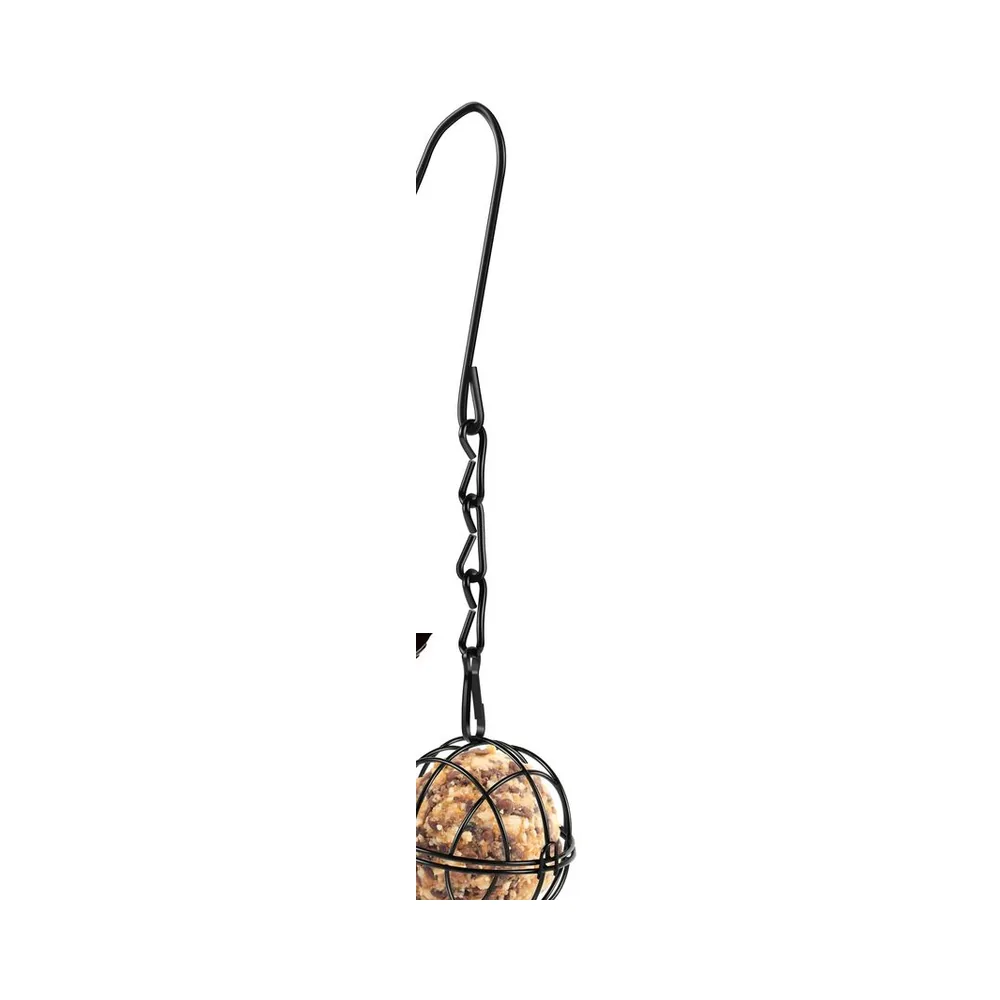
 Hanging Metal Fat Ball Feeders (Set of Four)
 Solar Fountain for Your Bird Bath
 Shepherd Hook Feeder Pole
This was the first bird feeder I ever made, aged about seven, and it is still the project I set for families at workshops. Twenty minutes, almost no cost, and the tits find it within days.
It is also the one most often made slightly wrong, in ways that either waste the afternoon or are not great for the birds.
What you need
- An open pine cone — the wider the scales, the more it holds.
- Suet or plain lard, softened at room temperature.
- Sunflower hearts, or a good seed mix without wheat filler.
- Garden twine or string. Not fishing line, not wire.
- A butter knife and a plate, and someone small who does not mind getting sticky.
Use suet or lard, not peanut butter
This is the substitution that matters.
Peanut butter is the internet's default and it is not ideal. Most jars are salted, and birds cannot process salt. It also stays soft, which means it smears onto feathers and damages waterproofing.
Plain lard or beef suet sets hard, holds the seed properly, and is exactly the food the birds want anyway. If you must use peanut butter, it has to be unsalted and unsweetened, and it is still the inferior option.
Never margarine, spreads or butter — all too soft, and salted.
The method
- Tie a good length of twine around the top of the cone, under the upper scales, and knot it firmly. Do this first — it is fiddly once the cone is greasy.
- Soften the fat. Room temperature, not melted. Melted fat runs straight out of the cone.
- Press it into the gaps with a knife or fingers. Really work it in rather than coating the outside.
- Roll the whole thing in a plate of sunflower hearts and press them home.
- Chill it for an hour. This is the step people skip, and it is why cones fall apart the moment they go outside.
Where to hang it
Same rules as any feeder. Two to three metres from cover so birds can bolt, 1.5 to 2 metres off the ground, and two metres clear of any fence or branch a squirrel can jump from — see where to position a bird feeder.
Squirrels love these. A cone on a branch is a gift to them. If you have squirrels, hang it from a pole in the open, or accept that you are making squirrel food.
What comes to it
Blue tits and great tits first, usually within two or three days once one bird works out what it is. Coal tits will take fragments away and cache them.
Underneath, robins and dunnocks pick up the crumbs, so it is worth hanging one over a catcher tray or a paved bit you can sweep.
If you want to widen the audience, press some dried mealworms into the fat as well — see what to feed garden birds for the wider menu.
Making it last
They are not permanent, and should not be.
In mild weather the fat softens and can go rancid within a few days. Take it down, scrub the branch or hook, and hang a fresh one. In cold weather it will happily last a fortnight.
Never hang one in full afternoon sun in summer. Soft fat in July is the version that genuinely harms birds.
Variations worth trying
- Add dried mealworms to the seed for robins and dunnocks picking up below.
- Use a toilet roll tube if you have no cones — same method, and it composts. Not a plastic bottle, which has sharp cut edges.
- Half an orange or apple scooped out and filled works for blackbirds and blackcaps.
- Make six at once and freeze the spares. They keep for months and you can hang a fresh one every week.
Doing it with children
The sticky part is the appeal, so let them do the pressing.
Two things worth saying while you are at it: why we do not use salted anything, and why the cone goes two metres from the fence. Children remember rules that come with a reason attached.
Then put it where they can see it from a window, because the payoff is watching a blue tit find it three days later.
More in the DIY guide, and the rest of this series at DIY and garden wildlife.
Finding and preparing the cones
The cone itself is the one part of this that people improvise badly, and it is worth ten minutes.
You want an open cone with the scales spread, because that is what holds the fat. Cones collected in wet weather are closed — they open and shut with humidity — so a cone gathered on a rainy walk will look useless. Leave it somewhere warm and dry indoors for a day or two and it will open on its own.
Pine, spruce and larch cones all work; the larger and more open the better. Give them a shake to clear out grit and anything living in them, and if they have come off damp ground, a few hours somewhere warm sorts them out. Do not bake them in the oven, which is a common suggestion and mostly a good way to fill the kitchen with the smell of resin.
One practical note: collect a few more than you need. They are free, they store indefinitely in a paper bag, and the whole build takes ten minutes once you have them ready.