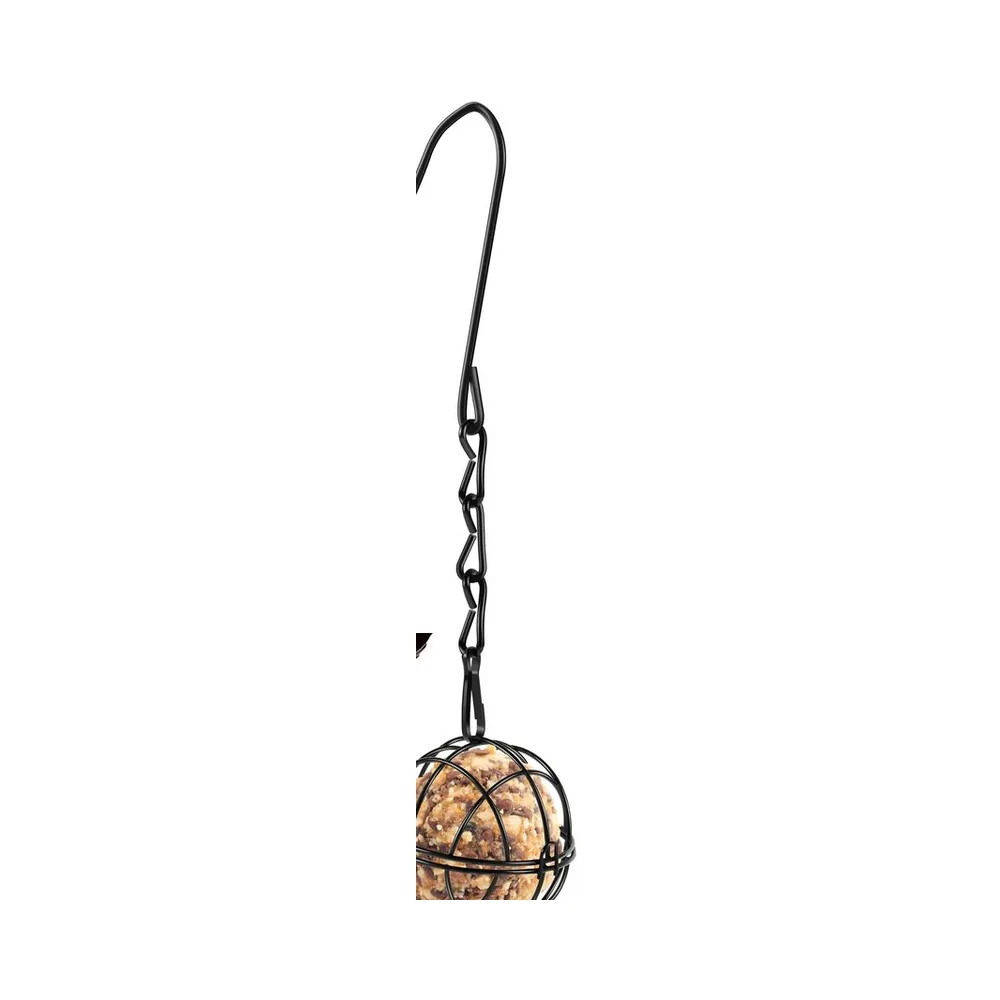
 Hanging Metal Fat Ball Feeders (Set of Four)
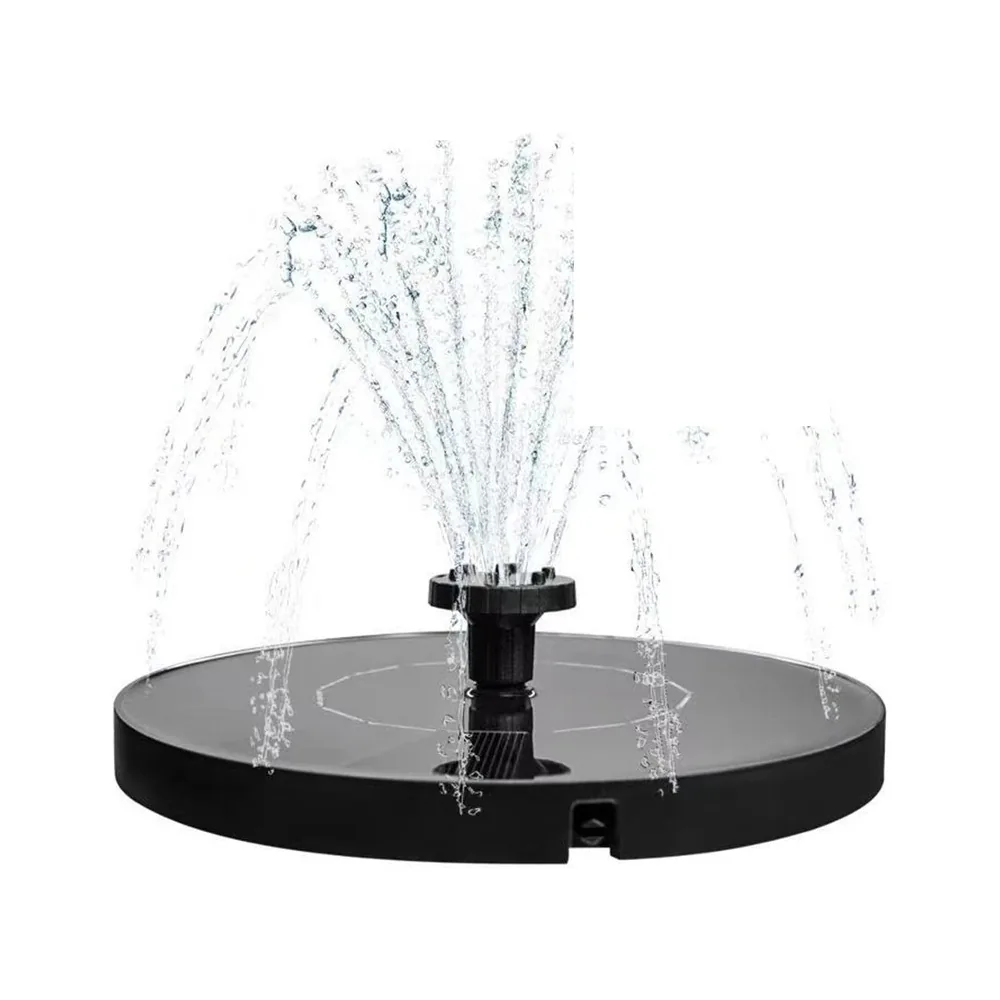 Solar Fountain for Your Bird Bath
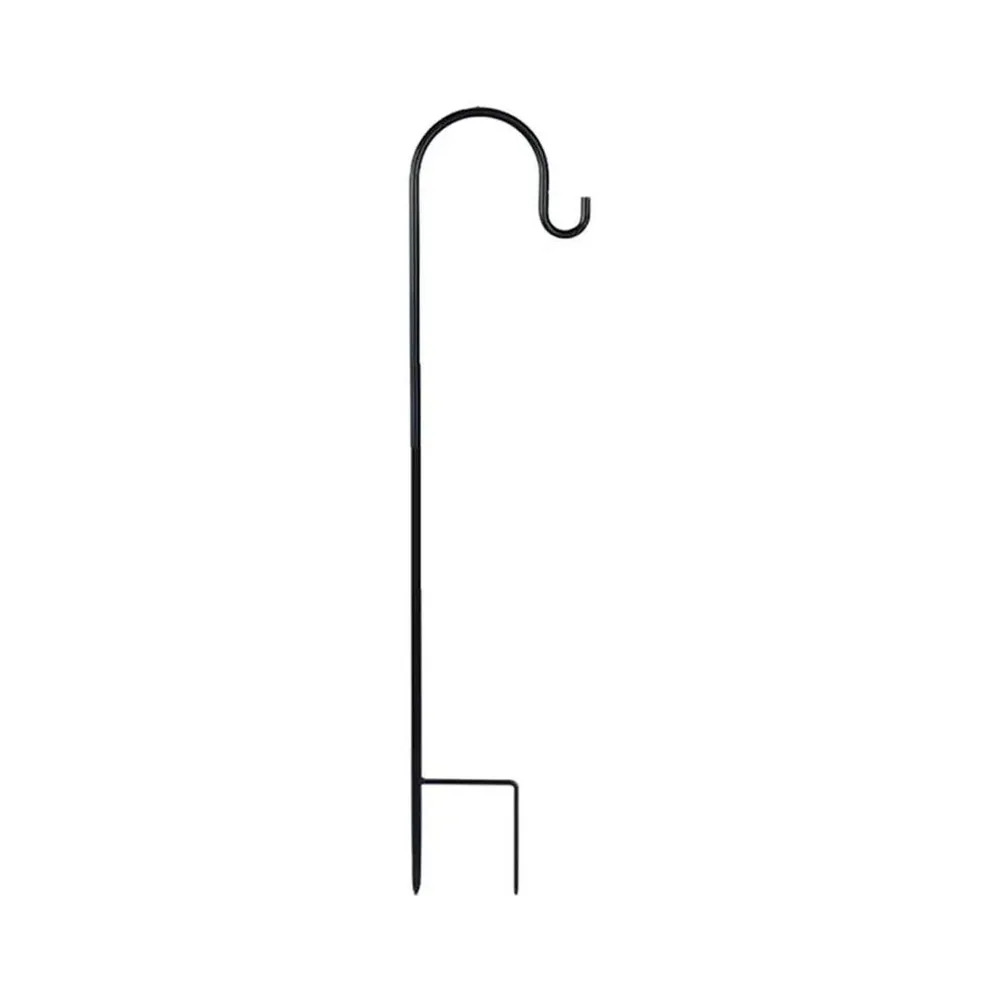 Shepherd Hook Feeder Pole
These three get used interchangeably in conversation and they should not be. They do genuinely different jobs, and buying the wrong one is why people conclude that none of it works.
Here is what each actually does.
The baffle: blocking the climb
A dome or an inverted cone, fitted on a pole below the feeder.
The squirrel climbs, meets a smooth downward-sloping surface, cannot get purchase and slides off. Some baffles are hinged so they tip under weight, which works even better.
Solves: the route up a pole.
Fails when: mounted too low. This is far and away the most common mistake. Below about 1.2 metres a squirrel simply jumps over the entire assembly from the ground.
It also fails on a rough surface. A baffle on a wooden post is much less effective, because the animal can grip the post above it if it gets any kind of hold.
Verdict: on a smooth metal pole in open ground, mounted high, this is the closest thing to a complete answer.
The guard: blocking the drop
A large dome or disc fitted above a hanging feeder, on the wire or chain.
A squirrel coming down a branch or a wire meets an umbrella it cannot get round, and the harder it works the more the whole thing swings.
Solves: the route down onto a hanging feeder.
Fails when: the feeder is close enough to a branch to be jumped at sideways. A guard only defends from above.
The other limitation is size. A small guard gets reached round. It needs to be considerably wider than the feeder to be worth fitting at all.
Verdict: useful where you have no choice but to hang from a branch. Not a solution by itself.
The cage: protecting the food
Mesh around the feeder, with gaps of roughly four centimetres.
This one does not try to stop the squirrel arriving. It accepts that it will arrive and makes the food unreachable when it does.
Solves: access to the food, and as a bonus keeps starlings, woodpigeons and magpies out too.
Fails when: it is plastic. A determined squirrel chews plastic mesh open in a season. Steel does not have that problem — ours are steel: caged fat ball feeders.
It also does nothing about shaking. A squirrel that cannot reach in will happily hang off the outside and rattle seed onto the ground.
Verdict: the best value of the three, because it solves two problems at once. Not complete on its own.
The thing that beats all three
Two metres of clear air.
A grey squirrel jumps around two metres horizontally from standing and more coming downwards. If there is a fence, shed, wall, water butt or branch within that distance, every product above is working uphill.
Move the feeder into the open first. Then fit the hardware. Doing it the other way round is how people end up with a drawer full of baffles and a fat squirrel. The full sequence is in how to squirrel-proof any bird feeder.
What I would actually fit
If you have open lawn: a metal pole, a baffle at 1.2 metres or higher, and a steel feeder. Best result, lowest total cost.
If you can only hang from a branch: a wide guard above, a caged feeder below, and pick the thinnest outer branch you can. Accept that you will lose some rounds.
If you have a wall bracket: a caged feeder, and check the bracket is not within jumping distance of the wall top or a windowsill.
Three things people try that do not count
Worth naming, because they come up constantly and they waste money.
A cone made from a plant pot. Fine in principle — it is a baffle. It fails because it is usually too small and too light, and a squirrel tips it. If you are making your own, go wider than feels necessary and fix it rigidly.
A slinky over the pole. Genuinely entertaining to watch once. Then it tangles, rusts, and the squirrel learns to climb inside it against the pole.
Hanging from fishing line. The theory is that it is too thin to grip. In practice they walk it, and I have watched one do the last stretch hanging underneath.
And the spill, again
Whichever you fit, deal with what falls. Ground spill feeds squirrels regardless of how good the feeder is, and it brings rats too.
A catcher tray and husk-free sunflower hearts between them remove most of it. There is more in do squirrel baffles actually work, and the rest of the series is at squirrel and pest-proofing.
Retrofitting versus starting again
Most people arrive at this question with a feeder already hanging somewhere, and the honest answer is that retrofitting works for one of the three options and not the others.
A cage is a genuine retrofit. Universal cages drop over an existing tube and cost a fraction of a new feeder, so if what you own is otherwise sound, that is the cheap fix.
Baffles and guards are not really retrofits, because they depend on the position rather than the feeder. Fitting a baffle to a hook screwed into a fence achieves nothing, since the squirrel is jumping rather than climbing. If your feeder is on a fence or a low branch, the honest choice is either a cage or moving the whole station onto a pole in open ground — and if you are buying a pole anyway, buy the baffle at the same time rather than discovering you need it a month later.