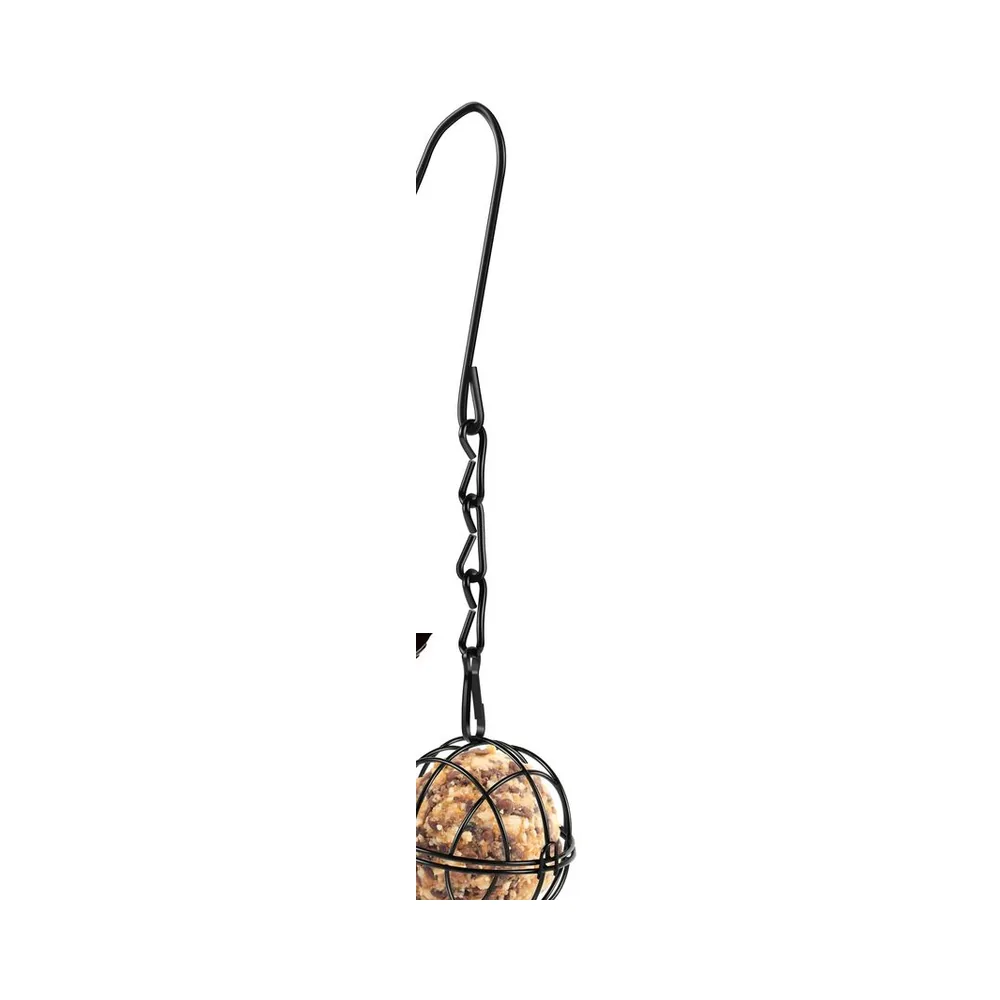
 Hanging Metal Fat Ball Feeders (Set of Four)
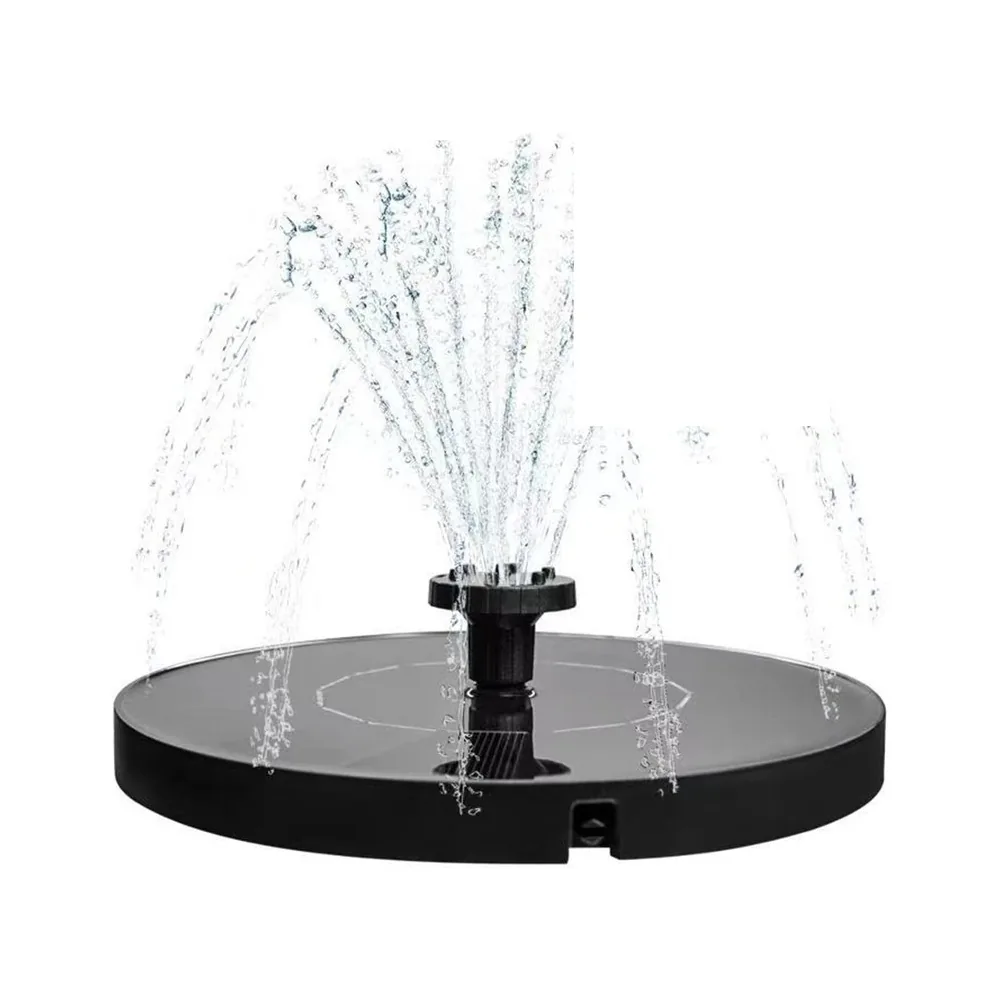 Solar Fountain for Your Bird Bath
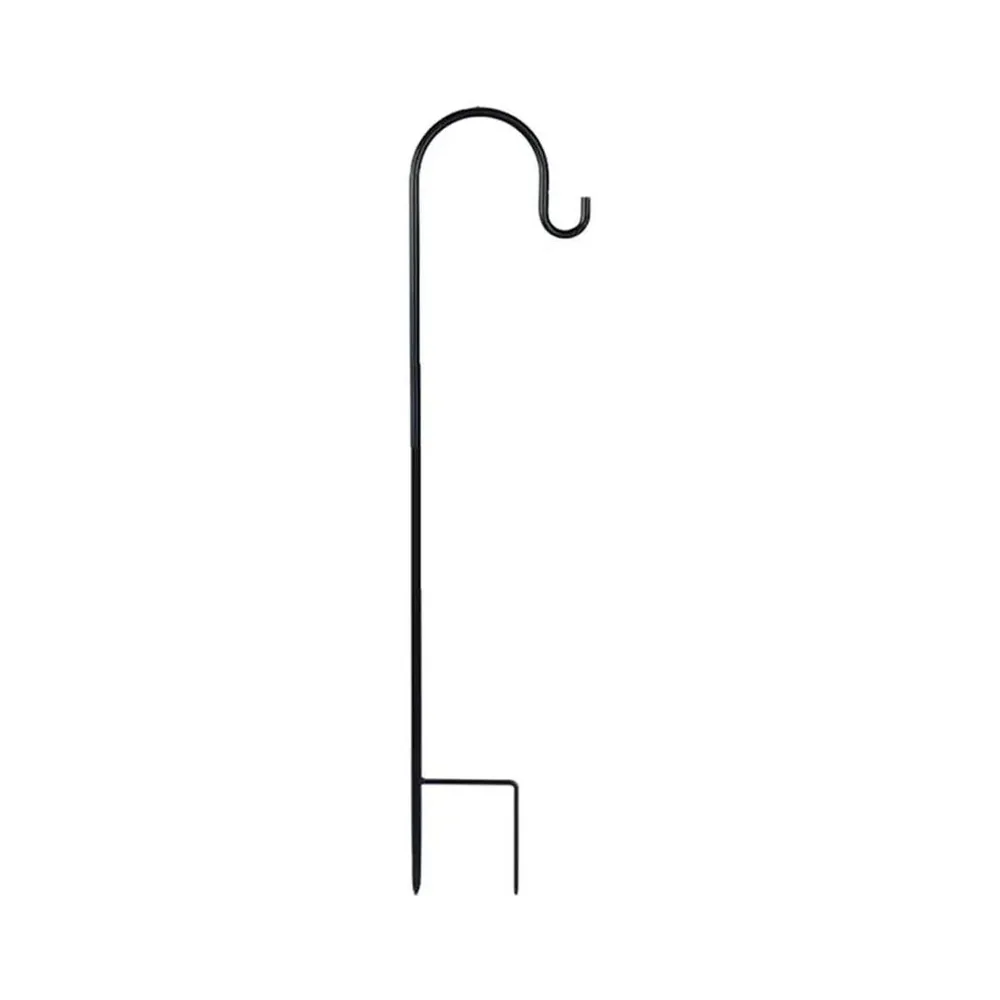 Shepherd Hook Feeder Pole
I have written elsewhere about baffles and cages. This one is only about geometry, because geometry is what actually decides it, and almost nobody measures.
Go and get a tape measure. Genuinely — this takes ten minutes and it will save you buying things you do not need.
The numbers
A grey squirrel clears roughly two metres horizontally from a standing start on a flat surface.
Dropping down from something higher, it will manage three metres or more, and it does not particularly mind the landing. Falling is cheap for a squirrel; they are built for it.
Climbing is unlimited on anything with texture — bark, brick, timber, wire, rough render. Smooth metal is the only common surface they struggle with.
Two metres out, three metres down. Everything else follows from those two figures.
Survey the garden properly
Stand at the spot you are considering and turn a full circle. Anything solid a squirrel could sit on, within two metres, is a launch pad.
The obvious ones people already think of:
- Fence panels and fence posts
- Tree trunks and any branch thicker than a finger
- Walls and low roofs
The ones people miss, which is where it goes wrong:
- The water butt. Flat top, exactly the right height.
- Washing line posts and rotary driers.
- The shed roof — and remember to add three metres of drop.
- Garden furniture, especially anything left out over winter.
- A trellis or an obelisk in the border.
- A large plant pot turned upside down.
- The bird table, if you have one.
Then look up. Anything overhanging within three metres is a drop point, and that includes next door's tree reaching over the fence.
The seasonal problem
Here is the one that catches people out, including me.
You survey in February, get everything right, and it works beautifully. Then in June the hedge has put on sixty centimetres, the shrub behind the feeder is a metre taller, and the clearance you measured is gone.
Squirrels find it before you do.
Re-check in early summer, and again after any pruning that changes the shape of things. It takes two minutes with the same tape.
What a clear position actually looks like
Open lawn, or the middle of a large border. A smooth metal pole pushed in to at least a third of its length, with two metres of nothing on every side and nothing overhead.
That is genuinely all it takes, and it beats every product on the market. If you can find that spot, you have solved the problem for free.
When you cannot get the clearance
Small gardens often cannot. In that case you are stacking defences rather than relying on position:
- A baffle on the pole at 1.2 metres or higher.
- A steel feeder so nothing can be chewed open.
- A cage with four-centimetre gaps so the food is unreachable anyway.
- A catcher tray, because ground spill feeds them regardless.
The full sequence is in how to squirrel-proof any bird feeder, and the hardware comparison in guards vs baffles vs cages.
The vertical measurement people forget
Two metres of horizontal clearance is the number everyone quotes. The vertical one matters just as much and gets ignored.
A squirrel on a branch three metres above your feeder does not need to jump across at all — it simply lets go. It will absorb a drop that would break most animals and be eating within seconds.
So when you survey, look up as well as around. If there is anything overhanging the feeder within about three metres, the position is not clear no matter how much lawn is around it.
This is the single reason hanging a feeder in a tree almost never works, however far out on the branch you put it.
One thing worth knowing
Squirrels are individuals, and some are considerably better at this than others.
You may hold a position for two years and then get one that works out a route nobody else did. It is not a failure of the method; it is one unusually determined animal.
When that happens, go back to the tape measure rather than the shop. Nine times out of ten something has changed — growth, a new pot, furniture moved — and the clearance is no longer what you think it is.
The rest of this series is at squirrel and pest-proofing.
The structures you do not control
Measuring your own garden is straightforward. The complication is everything just outside it.
A neighbour's fence panel, shed roof, garage, tree or trellis is a launch point exactly like your own, and you cannot prune it. Nor can you do much about a wheelie bin that gets moved to a new spot, a stack of pallets, or a trampoline.
So survey outward, not just inward, and pay attention to anything within about three metres of the boundary at or above feeder height. Where the clear distance genuinely cannot be found — a small courtyard, a narrow side return — accept it and change the approach: a caged feeder that a squirrel cannot use, hung wherever suits you, is a better answer than a pole you have no room to place properly. Geometry is the ideal solution and hardware is the reliable fallback.